Living under a dictatorship
- Illyria by Bryony Lavery is set in a setting influenced by war and dictatorship. The subjects are under the power of the Generallismo.
Dictator examples

- Saddam Hussein of Iraq (16th July 1979-9th April 2003) - Saddam built a reputation among Iraq as a progressive, effective politician as well as being a 'family man'. Nevertheless, it has been estimated that under Hussein's rule, the exact number of deaths on his hands are as high as half a million. His dictatorship was such a paradox in the way that he convinced a lot of the Iraq population that he was a good man yet he committed mass crimes, A long list of Saddam's crimes is here.
- Augusto Pinochet of Chile (1973-90). Investigators have identified under rule, at least 3200 people were murdered and 30,000 people were tortured. For example, it has been said that he often targeted students who were seen as 'progressive' and a threat to the set political structure of Chile, rounding them up in sports stadiums and committing mass killings, then burying their remains in those stadiums so the media wouldn't be alerted. He assumed power following a US backed take over that forced the Socialistic government to step down and hand power to the ruthless dictator Pinochet.
- Francisco Franco of Spain (1st October 1939-20th November 1975) ruled Spain for 36 years. He was a Conservative and a monarchist, extremely against Communism. This worked in his favour and he consequently gained a lot of allying support from Nazi Germany and Italy (Hitler and Mussolini), which helped him win in the Spanish Civil War and establish a totalitarian, Nationalist (fascist) state. Franco's regime committed a series of politically motivated human rights abuses against the Spanish people, for example, more than 190 concentration camps were set up (the use of force labour and executions were applied, like Hitler - for the punishment of people with opposing ideologies) and causing an estimate 200,000-400,000 deaths. Nonetheless, because Franco was so Anti-communist, his regime was therefore assisted by the West and he was asked to join the United Nations. By the 1960s, Spain saw incremental reforms and progressive economic development.

How are dictatorships established?
- Dictatorships can be created either politically or by force from opposing military groups.
- For example, many dictators search office via democratic elections and then become dictators later, like Cuba and Germany.
- Dictators always require a chain of events in order to rise to power, such as political unrest or economic crisis.
- Dictators can also be extremely charismatic and they can use their talents/propaganda to convince a majority that they can make things better for the country. People in desperate situations may see them as a new extremity that they have no choice but to opt for.
- For example, one of the factors which helped Hitler rise to power as a Chancellor in January 1933 was his popularity following the Wall Street Crash in the US in October 1929. This had widespread effects across the World, significantly Germany, with an abundance of failing business, unemployment and rising homelessness. The Weimar Government which had been set up by the president then, President Hindenburg, was a result of proportional representation and many people were extremely outraged by it, feeling failed in their economic situation. Brüning, the chancellor between the 1930-32 elections, had also proved very unpopular as he had raised taxes, cut wages and unemployment benefit. Hitler and the Communist Party were extremist options for the majority of the population who needed an alternative. Hitler used his propaganda minister, Goebbels to create propaganda which portrayed him a serious, charismatic leader who would bring justice to Germany. He blamed the Wall Street Crash on the rich Jews, the shameful Treaty of Versailles and the unpatriotic Communists. This space-goating gave him power/popularity among the population and with a desperate Weimar Government leadership, by 1933 they practically handed him power - however, they were unaware that Hitler would soon establish a dictatorship by 1934 the next year.
^Before Pinochet's rise to power in Chile, Salvador Allende (a socialist) was the president. In this video, he makes his last speech to his people as Pinochet's men were practically taking over the country in the background with violence and torture. He talks about himself in past tense and thanks the population, saying he wishes them to 'take advantage of the lesson' that is coming. At the end of the clip, Allende dies and it is unknown whether he is murdered or commits suicide. This clearly shows the brutality behind some established dictatorships and the obvious corruption which lies behind what some civilians see in dictators.
Why is Illyria in a dictatorship and what evidence do you have to back this up?
Some evidence for dictatorship/effects of war in the play:
"They arrive for her. It is most efficient. Ordered." - ordered, set in stone ways of dictatorships
"Illyria. Once famous beautiful green green woods. Once music. Once beautiful dancing. now, famous for war. You come for our War?"
"You're being driven into a city that was once home to say, four hundred thousand people. Now home to War. Imagine.."
"Bombs"
"For mile upon mile there is no building left intact"
"Between the heaps of rubble. The deep crates..."
-Scene Four especially: about the soldiers' experiences of war which are echoed as they walk through the safe house and see things in a war torn perspective.
My interpretation of Illyria's situation is that there was a great political division between two opposing ideologies, for example Communism/Socialism VS Nationalism and these two forces triggered a civil war which divided the country, or alternatively, there was a war between another country which affected Illyria nationally. Either way, the Illyrian economy was left in ruins and many Illyrians were affected - homeless, unemployed, ill, in bad condition. The fascist dictatorship of 'The Generallismo' stemmed from a weak government who didn't serve the country well and therefore it was overthrown by the new dictatorship power of the Generallismo: this was coordinated military intervention from a foreign country and the Generallismo's military who used violence against the nation. The dictatorship in the play is newly formed and Madame, the Generallismo's mistress, is a temporary 'new mistress' who is spoilt with shoes and is almost treated like a doll who has to be preserved and is sterile against what is going on around her.
Although the country's infrastructure and buildings could have possibly recovered since the war, hypothetically the 'beautiful green green woods' that Magda describes are of an alternative world that doesn't exist physically or mentally for any of the Illyrians in this new totalitarian state. Women are still raped by men and people are taunted and intimidated by the military of Illyria to conform to the fascism that exists. Scene Three with Maria and the three cleaning ladies illustrates this; it shows the fear which the women have and have to keep secretive as they tell Maria their experiences as women: "Every night she's in prison, she's lying bound and gagged and with a hood covering her face, one guard came and", "She screams as she feels inside her...", "She is clubbed unconscious, carried away, she never sees him again!". However, in Scene Four, when the soldiers arrived as I mentioned previously we also see an alternative interesting perspective of the people who have to also abide and force the Generallismo's dictatorship on ordinary civilians yet we see that they are still scarred and traumatised by their experiences like ordinary civilians as they walk around the safe house, seeing 'a stain on the floor no amount of scrubbing can remove' (This can suggest a mental stain/scar which represents their everlasting guilt for committing acts of ruthlessness and violence against civilians) or when Obseno describes 'When you climb in the direction up, you feel like you're going down... you think it's cold and dark and halfway up a hand of a wind clutches at your sleeve. you turn, there's no one there": overall, we see that it isn't just ordinary civilians that are scared and devastated by the effects of war, but the soldiers who have to impose dictatorship too are guilty, and in our devising process of the play we can possibly play with the idea that there is always dual aspects to how you look at something and challenge the audience to consider this. Our live feed can focus on the internal monologue and unspoken emotions of the soldiers especially in Scene Four - perhaps a shot could be filmed of a soldier going to an opposite room and how they are with themselves alone to show this guilt).
The effects of dictatorships on civilians
- Subjects under power are only ever exposed to one opinion which supports the totalitarian ideology. They know nothing else as when people growing up in dictatorships learn, they are only ever taught this one opinion and don't have the skill to challenge or question all they know, especially as they are taught everything else in the closed off world is wrong and backwards.
- Everything else is also controlled by the establishment, like media, haircuts, clothing, rules, traditions, businesses, imports, exports - in North Korea, continuous propaganda is constantly played through the radio and cannot be turned off by civilians.
- The military will often use threats, violence (and like Franco/Kim Jong Un/Hitler have/are using, concentration camps) to dictate their rules and laws upon everyone, even the rebels.
The fall of a dictatorship
- Dictatorships generally fall after a long period of action from local military groups or from foreign intervention - dictatorships typically come with bloodshed and are over when the leader has deceased or abdicates or removed by foreign intervention.
- When dictatorships are over, there is usually celebration for a while after until the realisation that society has to be reformed and reconnected - it's a long process. However, even though the media is constantly documenting the fall of dictatorships, it often abandons these countries when the dictatorship has fallen (however, sometimes foreign governments step in to stabilise a country's political situation, for example the division of Germany after Hitler's fall in 1945 by the USA, Britain and France)- this can identify with the ending of Illyria.
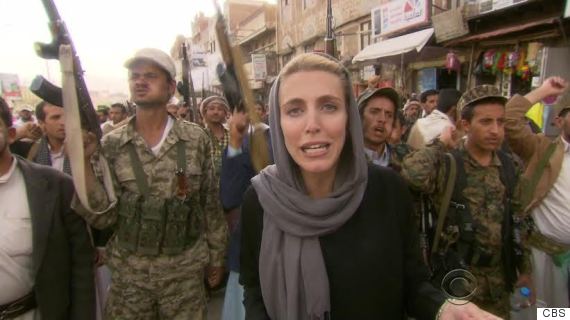
Female War Correspondents
Women on the front line article

Women on the front line article
- For any female entering a war zone, they are advised to wear a wedding ring, carry family pictures to help make people feel more empathy for them in case they do get in a dangerous situation.
- More than 750 journalists have been killed since 2005 while reporting for war.
- Half of the female journalists have reported being sexually harassed while being in war torn foreign countries.
- We can play with this idea with Maria being a female journalist during the devising process and use the struggles of being a female war correspondent as an alternative theme.
The Syrian Refugee Crisis: living in devastation with the effects of war
- More than five years after the war began, the Syrian civil war has killed a reported 470,000 people.
- Bombings destroying cities and violations of human rights are widespread.
- Basic necessities such as food and medical equipment are sparse.
- Many Syrian refugees are living in Jordan and Lebanon, where Mercy Corps has been addressing their needs since 2012. In the region’s two smallest countries, weak infrastructure and limited resources are nearing a breaking point under the strain.
- In August 2013, more Syrians escaped into northern Iraq at a newly-opened border crossing. Now they are trapped by that country's own internal conflict, and Iraq is struggling to meet the needs of Syrian refugees on top of more than 1 million internally displaced Iraqis — efforts that we are working to support.
- An increasing number of Syrian refugees are fleeing across the border into Turkey, overwhelming urban host communities and creating new cultural tensions. Mercy Corps is working in these areas as well to help families meet their urgent needs and build peaceful communities.
What are casting solutions for the whole class?
- Live feed/foley table - people will be needed from the cast to operate the live feed cameras and to make sounds on the foley table. As discussed in rehearsal today though, these people can also act as narrators who narrate some of the stage directions during the play and will be very important characters ultimately as they will always be in control of what the audience see and of their lasting impression from what they gathered from the play.
- Multiple Maria journalists: there could possibly be a team of journalists who are all alternative versions of Maria who could represent her at different times of the play. For example, there could be one version of Maria who acts as the optimistic, almost naive Maria before she arrives at Illyria to report - her version of the 'green green woods' back home is such a massive contrast to what she sees in Illyria. There could be another Maria who is constantly exiled from Illyrian society throughout the trip as she cannot speak their language and she lacks a translator. Another Maria could be constantly vomiting and pregnant. Another Maria could be a version who represents the woman Maria is hypothetically after she experiences going to Illyria and how the things she sees ruin and scar her mentally, however all of these versions are present and are constantly on stage all simultaneously as Maria during her scenes.
- The 'puppeteers'/mechanical people: these are people that could be used to operate puppetry scenes in the play, for example in Scene Four, the puppetry idea we discussed where manually blocks are used and moved by actors to create a stairway for Obseno will need to be coordinated by actors who can move gracefully and are like stuntmen.
- Ensemble physical theatre. At particularly significant, emotional moments in the play, I think it would be an effective experiment to play with/very interesting if we had ensemble moments where everyone does a choreographed physical theatre sequence. The pace and particular movements could be dependent on the mood and actual pace of the scene itself. If everyone in the cast is involved in these moments, then it intensifies the atmosphere and the mood that we aim to create.
- The live feed cameras
- The narrators
- A microphone
- A dolls house which is filmed at the beginning of a new scene. Dolls in the house could be moved around to show the mood of a scene and change in characters. They could also be positioned to show different metaphors in scenes.
- Foley materials to make sounds
- A handheld bell ringing thing to signify important moments in the play or sudden shifts in pace or mood