First impressions of the play:
From initially reading the play, I think that there is many opportunities to create something very interesting and original as a class and to utilise our own thoughts and creative ideas in combination with the gaps that the play leaves for someone to make it their own. I think that the first few weeks will be extremely crucial to making the play effective as this will decipher the concept that we use which makes this play a hopefully unique, surreal and intriguing experience for the audience.
The play could be staged end on as I think having a promenade, immersive experience could be a little too much for the audience. Given that Illyria is a naturalistic piece, I think that it will be easier for the audience to absorb it if they are separated from the action with a fourth wall, nevertheless I still think the play would be effective if we still interacted with the audience or had scenes which went into the seating area - this adds to the surreal aspect.
After discussion with my peers, we thought that the play would be ideal in context of the Spanish Civil War (because Illyria is predominately about the effects of war and dictatorship) which took place from 1936-39 and saw deeply rooted conflict between the Leftist movement and fascism (nationalism). Today, this is still relevant to some extent.


The Spanish Civil War 1936-1939
In the 1930s, Spain was a deeply divided country that was politically torn between right wing Nationalists (monarchists, landowners, employers, Roman Catholic Church and army) and left wing Republicans (workers, trade unions, socialists and peasants).
Following The Wall Street Crash in 1929, the economy was deeply affected by The Great Depression and the military dictatorship that had ruled Spain since 1923 collapsed. In 1931, the King abdicated after the Republicans came to power. There followed a period where the two political rivals had periods in power as the elected government. The country was so divided and unstable that in 1936 the army rebelled and forcibly removed the Republicans from power. This was the basis of the cause of the civil war.
In result, the better organised and better equipped Nationalist forces won the war after Madrid was captured in March 1939.
- Hitler's position in Europe was now strengthened since he had another potential ally in the right-wing dictator of Spain, General Franco. Participation and co-operation in the Spanish war strengthened the bond between Italy and Germany. As a result, the Rome-Berlin Axis was formed. Italy and Germany were now firm allies.
- What questions are being asked and what themes are being addressed in the play?
-What happens to our morals when affected by the devastation of war?
-How is patriarchy relevant in war?
-What are the constrictions of war?
-Corruption of power
-War
-Dictatorship
PLAY RESEARCH
 Illyria is a play written by Bryony Lavery (in 2002) and was part of a collection of other plays called Plays One in 2007.
 'Illyria' was a region in the Western part of the Balkan Peninsula, inhabited by The Illyrians and Shakespeare's play 'Twelfth Night' was set in Illyria. Twelfth Night is a huge inspiration for Lavery's play, which includes many intertextual references and characters who share the same names.
The play tells the story of Maria, a journalist who visits the war torn country Illyria however she soon becomes enthralled in the darkness, violence and torture of war.
Bryony Lavery
Some of her work:
- More Light
- Best known for - Frozen
- The Two Marias (1988) – Theatre Centre
- Her Aching Heart (1992)
- The Pink Paper's Play of the Year
- Peter Pan (1991) – a pantomime
- Goliath (1997)
- The Magic Toyshop (2001)
- A Wedding Story (2000)
- Illyria (play) (2002) – NT Connections
- Last Easter (2004)
- Stockholm (2007) – Frantic Assembly
- Red Sky (2007, play) – NT Connections
- It Snows (2008, play) – NT Connections
- Breathing Underwater (1998 radio play) – BBC Radio 7
- Kursk (2009, play) – Young Vic
- Beautiful Burnout (2010) – Frantic Assembly / National Theatre of Scotland
- Dirt (2012, play) – Studio Theatre
A lot of Lavery's work has a feminist undertone as she used to be an actor but gave up after receiving no good roles for being a woman. This led Lavery on to becoming a playwright with 'better roles for women', founded theatre companies such as Les Oeufs Maladies, Female Trouble, More Female Trouble and was artistic director of Gay Sweatshop.
Bryony Lavery Interview (very long)
Inspiration for Illyria (scene 4):


Inspiration for Illyria (scene 4):
How can we make our performance a visual and multimedia concept?
- We are going to use live feed. Cameras will be stationed around the stage and certain shots/aspects will be captured which can control the audience. Their attention will be therefore directed to aspects they may not have picked up on otherwise and therefore they are picking up on detail audience members would commonly miss or ignore.
- We are going to use live sfx (Foley). This takes inspiration from Katie Mitchell, a prominent multimedia director. This will take place on a Foley table where sounds will be made.
Katie Mitchell
• English theatre director - very prominent in the theatre world due to her controversial multimedia work and although she is generally popular in European theatre, she was exiled from the British theatre world after being too experimental.
•She experiments with multimedia theatre and two references of her work are Waves (National Theatre) and The Forbidden Zone (Barbican): two groundbreaking pieces of art.

- Katie Mitchell began to create multimedia productions as she was sick of constantly going to plays and being faced with an abundance of straight theatre productions which didn't provoke her imagination or challenge her intellect. However, her experimental style therefore made Mitchell extremely controversial as some people believed that the distinctive trademark that she put on her productions stripped the original art of its content and made her the main attraction over her plays themselves. She always has her personality behind her work which traditionalists didn't agree with. For example, in 2006 at the NT, she did a controversial production of Chekhov's 'The Seagull' which people believed was too experimental and really stripped down a lot of the language Chekhov used to something that wasn't his work anymore.

- Dark material is always prominent in Mitchell's productions, as if she wants to force her audience members to experience the depths of human behaviour and re live it, which helps challenge them to understand complex human issues. Her actors, for example, will always look beyond the stage and look straight into audience members eyes.
- In parallel with her naturalistic productions, she has collaborated with the film-maker Leo Warner to create works in which performers manipulate cameras and props so that images (often extreme close-ups) are projected on to a screen.
- Mitchell also has a very feminist perspective which definitely comes through in her work, for example for her production of Miss Julie by Strindberg, she based the perspective through the apparent least important character, the female low status maid to enunciate and challenge the audience's perception of the roles of characters in the play. As said by Andrew Haydon, Mitchell "wrestled a misogynist text to the ground and put bullets in the back of its head"
- Foley was first used by Jack Donovan Foley in the 1920s silent movie era when he worked with Universal Studios to bring silent films to life.
- Foley combined with ambient, abstract sounds such as traffic noises and birds singing can be used at particular times not just to set the time and place for a scene, but to really affect the audience's mood collectively at particular points of the play. We can use foley and understand how sound can evoke emotion in audience members which I think is very important to address as we devise Illyria.
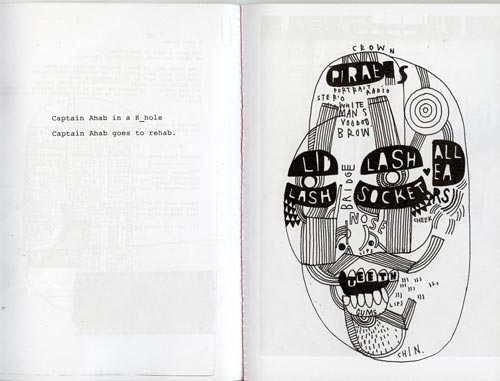
- Inspiration from David Shillinglaw: a living picture will evolve during the show in the style of his art. The sketch will pick up on different elements of the show as it evolves, such as the mood, themes, plot and lines that are significant during certain scenes and throughout the play. I think this is effective as it will challenge the audience in multi dimensional ways and will also make the class's perception of the play more carefully thought out and perceptive.
- In our logbooks/blogs, we will develop on this idea by creating two journal evolving drawings. One of the drawings will be on our perceptions of the show as we rehearse and the second will be predominantly about our character and our realisations about them.
Some of David Shillinglaw's work:




Gecko style theatre

No comments:
Post a Comment